



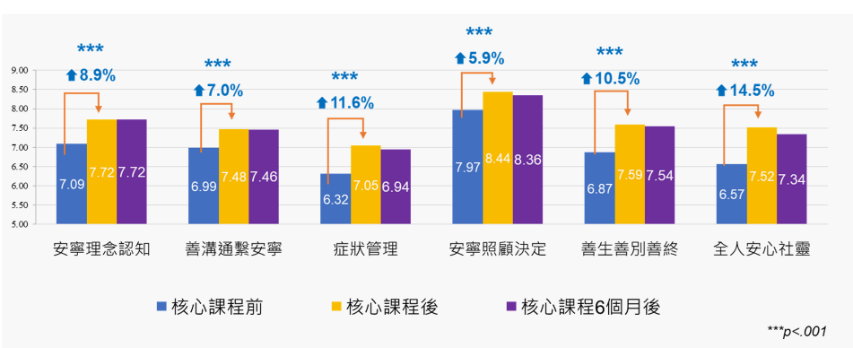
figure 1. Paired samples T-test on pre- and post-tests of core course hospice volunteer service ability (n=138)
Improvement of volunteer capabilities
Project Introduction
In the second phase of the Jockey Club Ode to Peace Project, the School of Social Sciences of the University of Hong Kong and its partners launched a three-stage training course for volunteer growth, including core courses, theme courses and leadership training courses. Volunteers participate in providing services after completing core course training and become an indispensable member of the organization’s “Integrated Community Hospice Team”. From 2019 to 2021, the project held a total of 12 core courses, 30 targeted thematic courses, and 16 leadership training courses for continuing education and support. In 2019, core courses and theme courses were conducted in physical teaching mode, but in 2020 and 2021, they were converted to online teaching due to the epidemic. After three years of development, the three-stage training course has trained a total of 418 hospice volunteers, 43 of whom have mastered leadership skills.
Research Methods
The three-phase training course uses different research designs tailored to its needs. The core curriculum uses pre- and post-test tracking research to evaluate the effectiveness of the curriculum in improving the service capabilities of hospice volunteers. Volunteers filled out a self-made questionnaire in the following three time periods: (1) before the course training; (2) after the course training; (3) 6 months after the course training. The questionnaire includes a multidimensional hospice volunteer service ability scale that allows volunteers to self-assess their service ability levels at different points in time. Thematic courses focus on satisfaction research on training content. The leadership training course uses a set of standardized questionnaires to assess leadership service skills in four aspects before and after volunteer training, including activity design, self-care, team building and communication bridge skills. Paired samples T-test and repeated measures analysis of variance were used to detect changes in hospice volunteer service capabilities at different time points.
Research Results
Core Courses
Research shows that after receiving core courses, hospice volunteers’ hospice care abilities have significantly improved in all aspects, with the improvement ranging from 8.9% to 14.5%. The results are shown in the figure below (Figure 1). Improvements in ability remained unchanged 6 months after training was completed. Further analysis showed that the teaching mode did not affect the changes in the service ability of Anning volunteers. There was no difference in the changes in ability between volunteers who received physical teaching and those who participated in online teaching. Therefore, the results achieved by the two different teaching models are consistent.
Thematic Courses
The tranquility volunteers who took the theme courses expressed that they were very satisfied with the courses, and the average satisfaction score for all courses was above 4 points (the highest score was 5 points). Similar to core courses, there was no significant difference in course satisfaction between physical and online courses.
Leadership Training Courses
Anning volunteers who participated in the leadership training course have significantly improved their service skills such as activity design, team building and communication bridge, with an improvement rate ranging from 10.8% to 16.2%. The results are shown in the figure below (Figure 2).

figure 2. Leadership training course: Changes in leadership skills of Anning volunteers
Experiences from the Second Phase and Prospects for the Third Phase
In the second phase of the Anning Song project, the Anning volunteer service capacity building project has developed from a single basic course to a three-level training course that can provide continued support for the growth of volunteers, which is conducive to the sustainable development of Anning volunteer services. The current research findings also support the effectiveness of the three-stage training program in strengthening hospice volunteer service capabilities and cultivating potential leaders. Hospice volunteers expressed great satisfaction with the training courses. Considering that physical teaching and online teaching have similar effects on training effectiveness and satisfaction, we recommend converting some volunteer training courses into online learning in the third phase to improve the cost-effectiveness of the project while improving the tranquility volunteer service. Sustainability of capacity building.
