The Programme and Beneficiaries
Professional capacity building programmes in the Phase II Project (2019 – 2021) were mainly provided by the Chinese University of Hong Kong (CUHK) Jockey Club Institute of Ageing (IoA), the Hong Kong Association of Gerontology (HKAG), and the University of Hong Kong. While most of the training programmes of CUHK IoA were delivered in hospitals in New Territories East cluster, the programmes of HKAG were tailor-made for residential care home for the elderly (RCHEs), and the programmes of the University of Hong Kong targeted health and social care professionals in various community settings.
Over the 3 years in the Phase II Project, the CUHK had offered over 300 activity sessions to cover 30 000 participants from both the public and the healthcare sector. These trainings were delivered in the formats of seminars, lectures, symposium, online training, or train-the-trainer sessions. The CUHK team also developed various training and educational materials such as videos and booklets. On the other hand, the HKAG delivered a two tiers of structured training programme, one targeting health and social care professionals, and another targeting support care staff, in the RCHEs. Between 2019 and 2021, HKAG had delivered 382 sessions of basic EoLC training to 1 833 professional staff and support care workers in over 48 RCHEs to build their capacity to provide EoLC to their residents. Further 78 sessions of advanced training were provided to 310 RCHE staff, and 22 sessions of capacity building programme were delivered to 176 visiting medical officers.
The capacity building programmes in the University of Hong Kong were delivered by either the School of Nursing or the Faculty of Social Sciences. A programme composed of an entry level and an advanced level was developed by the School of Nursing benefiting 717 community nurses. A training manual was published based on this training programme that benefited 500 nurses in 2021. The capacity building programmes of the Faculty of Social Sciences can be categorised into three types –
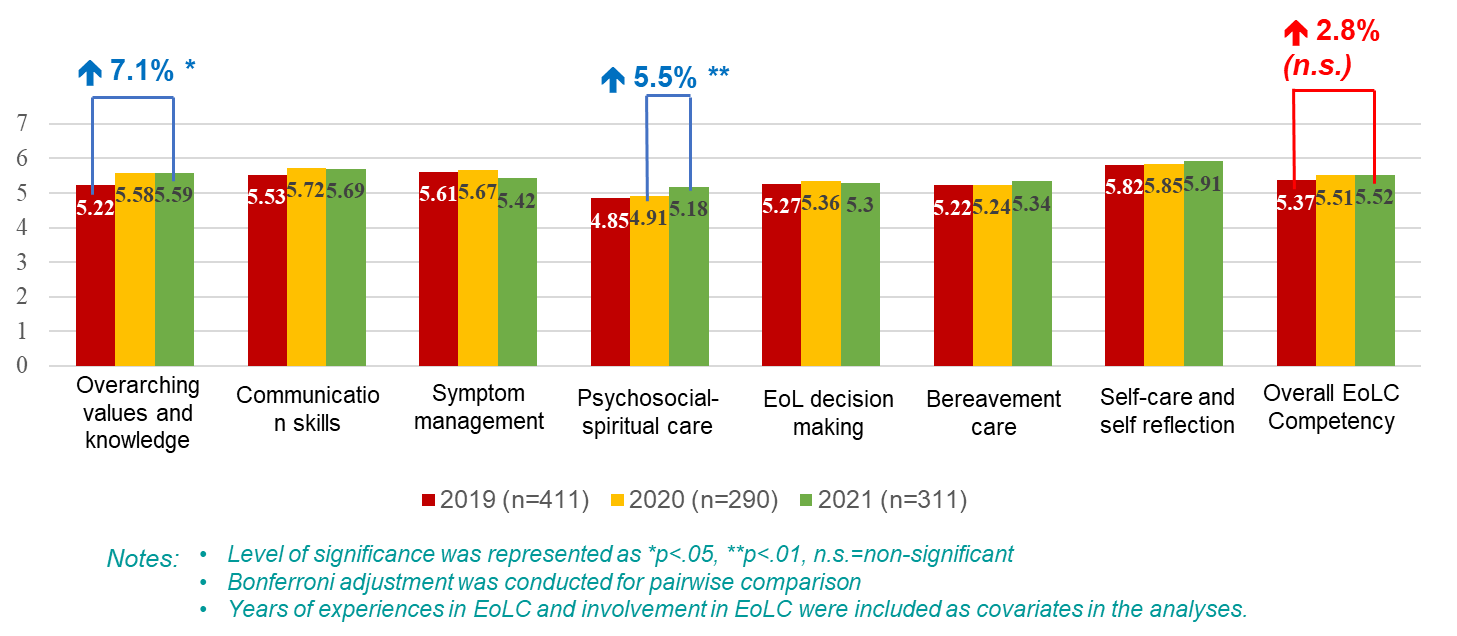
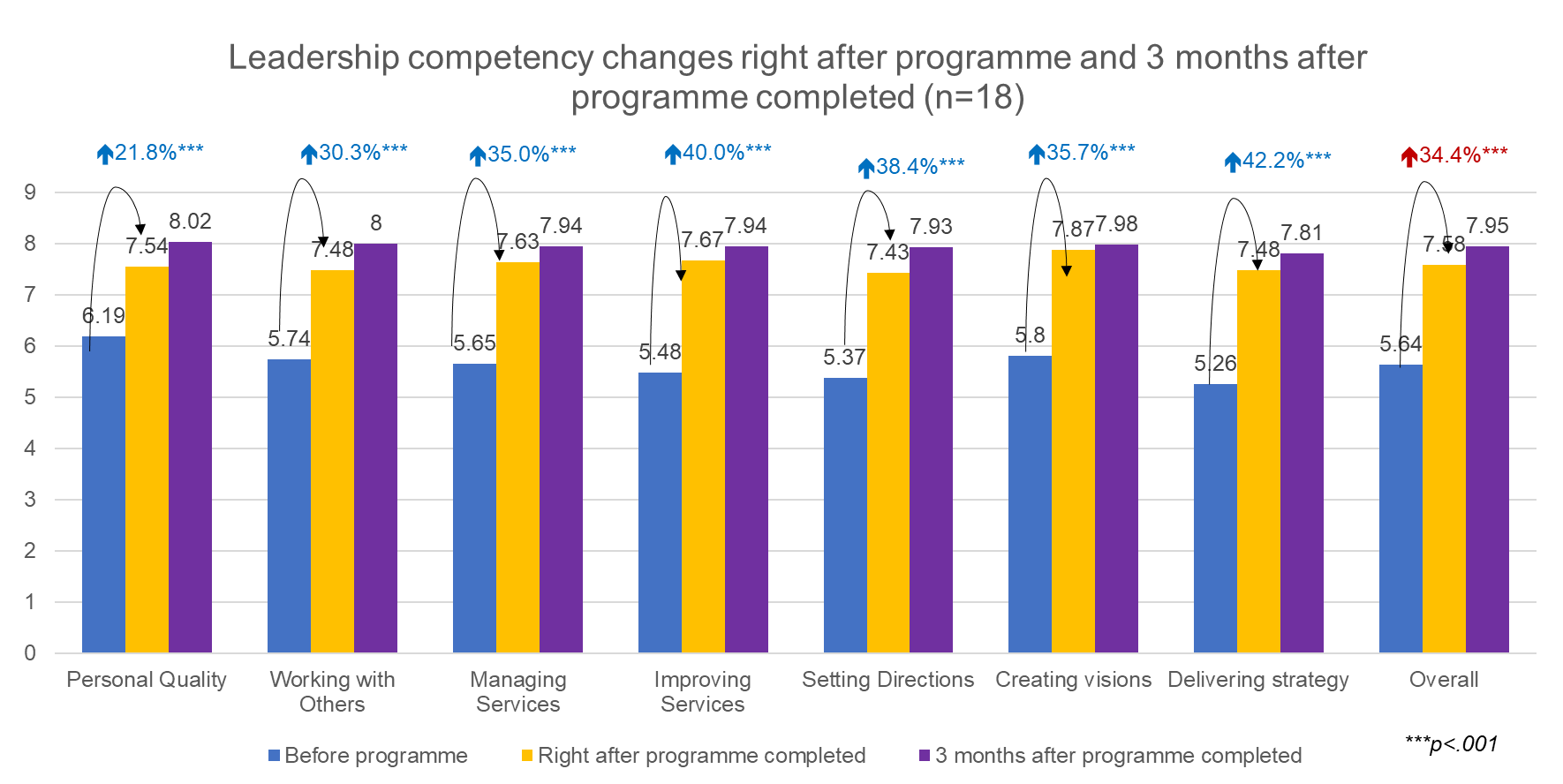
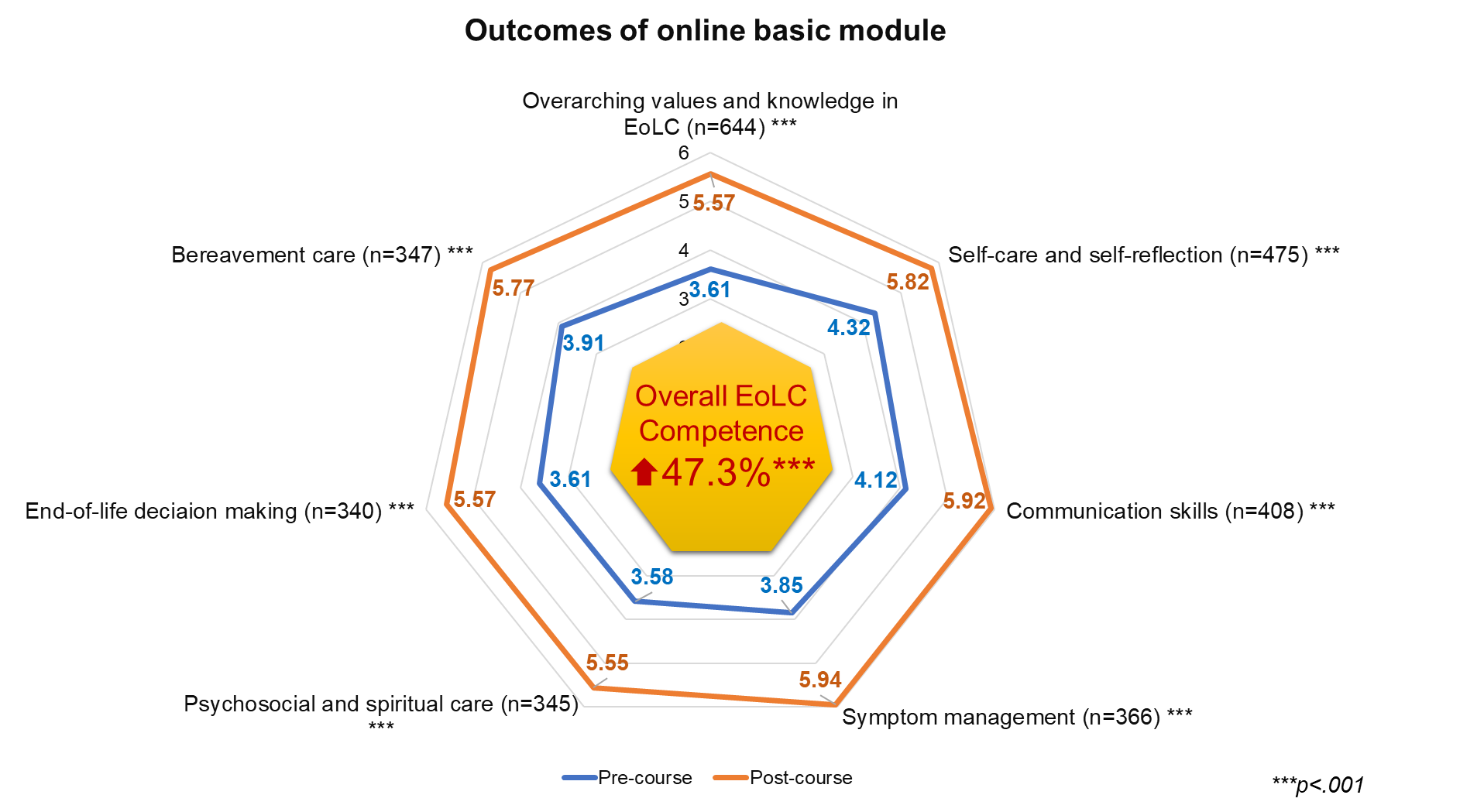
Under the long-term programme, a 10-month leadership training targeting middle management and service development personnel in related healthcare and social care field was delivered with a purpose to cultivate future leaders in community EoLC. Twenty-nine leaders nominated by 21 NGOs completed the programme and developed their proposals on EoLC-related projects. Under the intermediate-term programme, the Faculty of Social Sciences developed a flagship 3-tiered standardised community psychosocial EoLC programme consisting of a basic online module, and an intermediate module and an advanced module which are delivered in a flipped classroom format. The programme covered 7 core competencies in EoLC, and benefited over 3 600 health and social care professionals by the end of 2021. Regarding short-term programmes, the Faculty of Social Sciences tailor-made various training for specific service settings (e.g. elderly community service units, police force) and target groups (e.g. EoLC volunteer coordinators, social work students), or on specific topics (e.g. family intervention, symptom management, psychosocial care etc.), with over 1 900 participants. Besides, to prepare trained manpower for implementing the integrated community end-of-life care support teams (ICESTs), training programmes on ICESTs model were also delivered to 69 selected professional staff and support care staff, and 3 manuals were developed on the ICEST model.
This report focuses on the capacity building programmes delivered by the Faculty of Social Sciences, the University of Hong Kong. Details on the evaluation on the CUHK IoA programmes can be accessed here.





 26.2%
26.2%